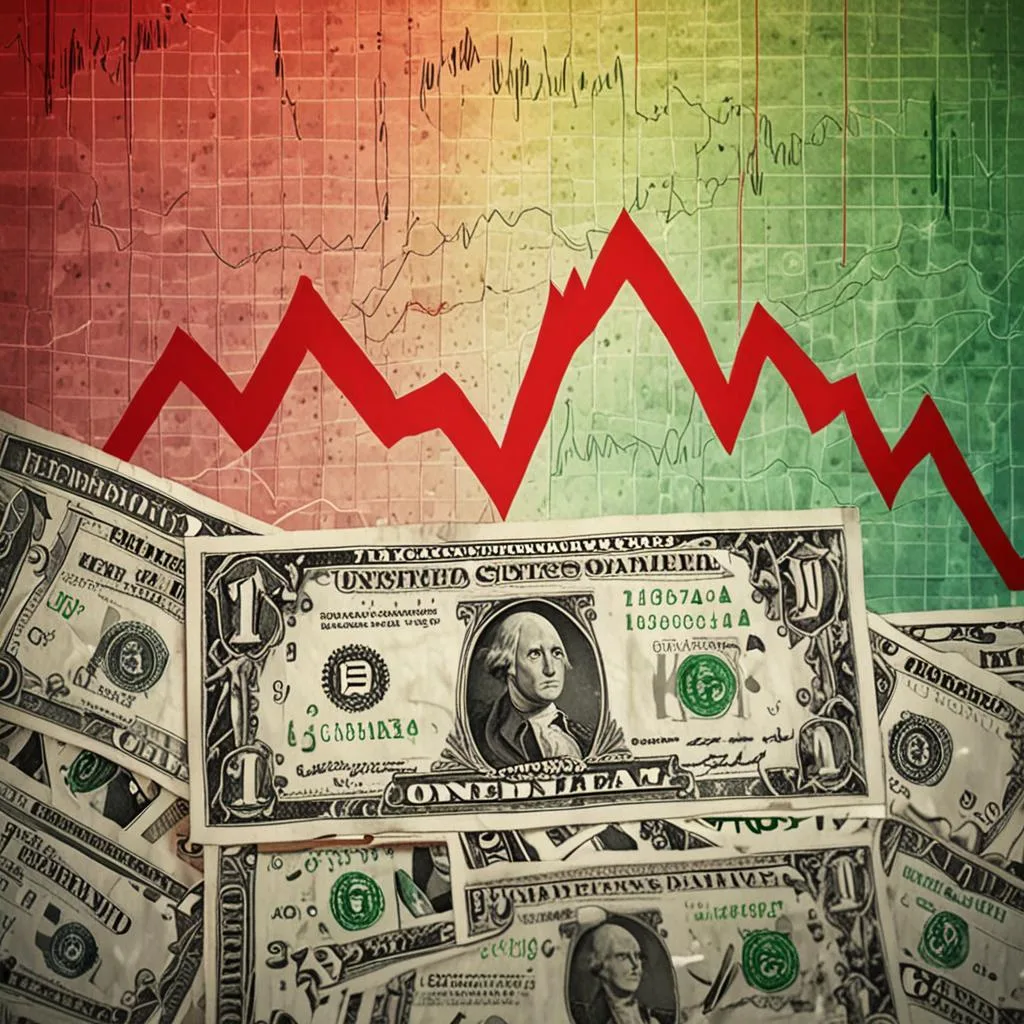
The U.S. dollar is facing unprecedented pressure as the Federal Reserve prepares a major policy shift. With rising national debt, weakening global demand for the dollar, and the rapid emergence of alternative trade currencies, the Fed’s next decision could reshape global markets and everyday American finances. This article explains why experts fear the dollar may be entering a long decline—and what you can do to prepare.
Why Analysts Are Warning About a Potential Dollar Decline
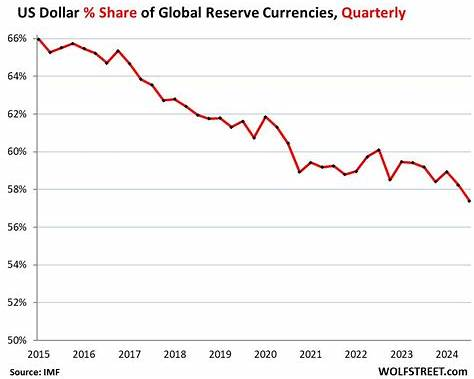
For over 80 years, the U.S. dollar has been the world’s most dominant and trusted currency. It has been the backbone of international trade, the primary reserve held by foreign governments, and the unit of account for global commodities like oil and metals. But today, economists, financial strategists, and even central bankers are raising concerns: Is the dollar’s golden era ending?
This concern doesn’t stem from sensationalism or fearmongering—it stems from structural economic changes and a turning point in U.S. monetary policy. The Federal Reserve is preparing a potentially major policy pivot, one that could lead to lasting consequences for the value and influence of the dollar.
Here are the underlying pressures the dollar is currently facing:
- U.S. national debt surpassing $35 trillion
- Interest payments projected to reach $1.2 trillion annually by 2026
- Declining foreign demand for U.S. Treasurys
- Global trade partners increasingly rejecting the dollar in bilateral deals
- Record levels of global central bank gold accumulation
These are not minor signals. They reflect a global shift toward multi-currency settlement systems, which directly challenges the dollar’s long-standing monopoly.
And the Fed’s next decision may accelerate that transition.
What Fed Policy Shift Could Trigger a Dollar Decline?
The Federal Reserve—responsible for managing monetary stability in the U.S.—is preparing to adjust policy in response to recessionary pressure, slowing consumer activity, shrinking credit markets, and unsustainable government debt burdens.
Most analysts expect:
- Faster rate cuts
- Renewed quantitative easing (QE)
- Structural liquidity support
- Balance-sheet expansion to absorb rising debt issuance
But why does this matter?
1. Rapid Rate Cuts Reduce the Dollar’s Appeal
When the Fed cuts rates, borrowing becomes cheaper—but the dollar loses attractiveness to foreign investors seeking higher yields. Countries and global funds that normally buy dollar-denominated assets often move money elsewhere.
2. Quantitative Easing Increases Money Supply
If the Fed reintroduces aggressive QE to stabilize markets or support government borrowing, it floods the financial system with dollars. While this can be helpful during crises, it typically weakens currency value.
3. Rising Debt Forces Indirect Currency Devaluation
With trillions in new debt being issued, the Fed may have no choice but to tolerate higher inflation over time. This reduces the real value of the dollar and effectively “devalues” it without officially declaring it.
4. Foreign Nations Are Buying Fewer Treasurys
This creates a critical problem: if foreign nations step back, the Fed itself must buy more debt—leading to further balance sheet expansion and potential currency dilution.
These interconnected factors form a powerful feedback loop that places downward pressure on the U.S. dollar.
Could the Dollar Lose Its Reserve Currency Status?
The U.S. dollar has been the world’s dominant reserve currency since the 1944 Bretton Woods Agreement. No other nation has matched the U.S. in institutional strength, military power, deep capital markets, and global influence.
But dominance doesn’t mean invincibility.
What We’re Seeing Today:
- BRICS nations are building new settlement currency frameworks
- Saudi Arabia has hinted at accepting non-dollar payments for oil
- China’s yuan is increasingly used for global commodities trade
- Emerging economies are settling deals without the dollar
- Central banks are diversifying out of U.S. bonds into gold at record levels
These developments mirror the slow decline of the British pound after World War II. It didn’t vanish—but it lost its status as the world’s monetary backbone.
Economists believe the dollar may be entering a similar phase of gradual erosion.
What a Dollar Decline Means for Everyday Americans
Most Americans don’t think about the dollar’s value unless they’re traveling abroad. But the dollar’s status directly affects:
- Interest rates
- Prices of imported goods
- Wages
- Credit markets
- Business profitability
- Investments and retirement savings
Here’s how a weakening dollar could affect daily life:
Higher Prices for Imported Goods
Electronics, clothing, medical supplies, machinery, and vehicles could become more expensive—because these require more dollars to purchase from abroad.
Persistent Inflation
Even if domestic inflation slows, a weaker dollar can reintroduce price increases simply because imports cost more.
Volatile Borrowing Costs
A weaker dollar reduces buying power and may cause lenders to increase long-term rates to compensate for inflation risk.
Reduced Purchasing Power for Savings
Retirement accounts denominated in USD lose real value when the currency depreciates.
More Expensive International Travel
A weaker dollar means fewer units of foreign currency, making vacations more costly.
Real-Life Example
A small manufacturing firm in Ohio importing specialized machine parts saw annual costs rise 17% after dollar volatility. With a weaker dollar, suppliers overseas are forced to charge more, squeezing American small businesses and forcing retail price increases.
This is how dollar weakness hits Main Street—slowly but painfully.
Why Are Countries Reducing Their Dependence on the Dollar?
The global shift away from the dollar isn’t personal—it’s strategic.
Countries want diversification, stability, and freedom from sanctions. Several global events accelerated this trend:
1. Sanction Risks
Nations are concerned that if U.S.–foreign relations deteriorate, their dollar reserves or assets could be frozen.
2. Volatile Fed Policies
Rapid interest rate hikes in 2022–2023 caused significant economic distress in developing nations. That volatility made governments rethink their reliance on the dollar.
3. Rise of BRICS+
Countries representing huge populations and large GDP shares now want to trade without Western currency constraints.
4. Shifts in Commodity Markets
Oil, natural gas, and metals are increasingly being priced—in part—in local currencies or yuan.
Real-Life Geopolitical Example
In 2023, India purchased discounted Russian crude oil using rupees instead of dollars. This transaction was symbolic: an emerging global power bypassing the dollar for efficiency and political neutrality.
These shifts highlight the beginning of a multi-currency world—one where the U.S. dollar is important, but not unchallenged.
Why the Fed’s Next Policy May Be a “Game-Changer”
The real game-changing element won’t be one single decision. It’ll be the combined effects of what the Fed does to stabilize the economy:
- Maintaining permanent liquidity support
- Allowing long-term yields to drift lower
- Managing enormous federal debt obligations
- Navigating global currency competition
- Preventing recession without sparking hyperinflation
This period may mark a turning point in modern monetary history. The world is shifting from a “dollar at the center” system to a network of competing currencies—and the Fed’s next policy could accelerate that transition significantly.
Is a Financial Crisis Inevitable if the Dollar Weakens?
Not necessarily. A controlled decline in global dominance is manageable.
But a rapid, disorderly decline could trigger:
- Sharp inflation
- Investment outflows
- Higher federal borrowing costs
- Weak consumer confidence
- Decreased foreign investment
- Stress in U.S. banks holding dollar-denominated liabilities
A slow decline is survivable. A fast one could be destabilizing.
How Americans Can Protect Themselves from Dollar Weakness
Here are practical, actionable steps individuals can take:
1. Diversify Retirement Savings
Include assets that historically hold value during currency weakness:
- Gold
- Commodities
- Real estate
- Inflation-protected bonds
- International index funds
2. Pay Down High-Interest Debt
A weaker dollar can create unpredictable lending conditions.
3. Build a Larger Emergency Fund
Aim for 6–12 months of expenses to shield against inflation spikes.
4. Use Side Income Strategies
Freelancing, consulting, and digital services can offset higher living costs.
5. Consider Dollar-Hedged Investments
Certain ETFs protect against currency volatility.
6. Choose Durable, Local Goods
Helps reduce dependence on more expensive imports.
7. Follow Federal Reserve Updates Closely
A single policy shift can dramatically influence market conditions.
10 FAQs Americans Are Asking About the Dollar’s Future
1. Is the dollar actually doomed?
No, but it is likely to weaken over the coming decade. The dollar will remain important but may no longer be the dominant global currency.
2. How fast could the dollar lose its dominance?
Experts estimate a 10–20 year gradual transition, though early signs of decline are already here.
3. Will the Fed intentionally weaken the dollar?
The Fed doesn’t target a weaker dollar directly, but policies like rate cuts and QE can indirectly reduce its value.
4. What happens to mortgages and loans if the dollar falls?
Inflation risks may cause lenders to raise long-term rates—even if the Fed cuts its short-term benchmark rate.
5. Will gold prices rise if the dollar weakens?
Historically, yes. Gold tends to rise when real interest rates fall and global currency confidence declines.
6. Is cryptocurrency a safe hedge?
Crypto can diversify risk but remains volatile. It should never replace essential assets like savings or retirement investments.
7. How will dollar weakness impact the stock market?
Export-heavy U.S. companies may benefit, while domestic-focused industries tied to imports may struggle.
8. Will international travel become more expensive?
Yes. A weaker dollar buys fewer euros, pounds, yen, and other currencies.
9. Will de-dollarization collapse the U.S. economy?
No, but it may introduce slower economic growth and more persistent inflation pressures.
10. What industries benefit from a weaker dollar?
Manufacturing, agriculture, tourism, and export-heavy industries often become more competitive globally.
Final Thoughts: Is the Dollar’s Decline Inevitable?
The U.S. dollar is not evaporating from the global stage—but the era of unwavering dominance is slowly shifting. The Federal Reserve’s next policy decision will play a major role in accelerating or moderating that shift. With rising debt, shifting global alliances, and increasing diversification into non-dollar assets, the monetary landscape is evolving rapidly.
The question isn’t whether change is coming—it’s how prepared you’ll be when it arrives.
