
Artificial intelligence is rapidly transforming how banks approve loans, assess risk, and interact with borrowers. While AI now handles many tasks once managed by loan officers, it has not eliminated the human role. This in-depth guide explains how banks use AI behind the scenes, what it means for borrowers, and why loan officers are evolving—not disappearing.
Introduction: A Quiet Shift in How Lending Decisions Are Made
Not long ago, getting a loan felt deeply personal. You sat across a desk from a loan officer, discussed your income and goals, answered questions, and waited for a decision that often took weeks. The process was slow, human, and heavily dependent on individual judgment.
Today, many borrowers receive loan approvals in minutes—sometimes seconds—without ever speaking to a human being.
This dramatic change has sparked a question that concerns borrowers, bankers, and loan professionals alike: Will artificial intelligence replace loan officers altogether?
Banks are not advertising the answer. In fact, many avoid discussing it openly. But behind the scenes, AI is already embedded in nearly every stage of modern lending. Understanding how it works—and where humans still matter—is essential for anyone navigating today’s financial system.
How Artificial Intelligence Entered Banking and Lending
AI did not suddenly appear in loan approvals. It entered gradually, starting with basic automation and analytics.
Early systems were designed to:
- Speed up credit checks
- Flag suspicious applications
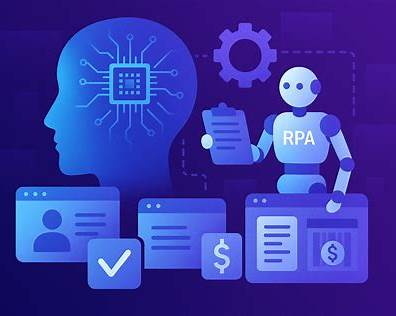
- Reduce manual paperwork
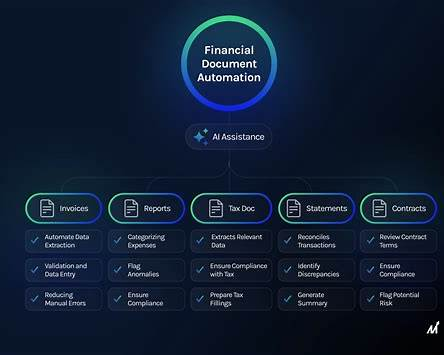
Over time, banks layered machine-learning models on top of these systems. Instead of relying on a limited set of rules, AI could analyze thousands of data points simultaneously, identifying patterns no human could easily see.
Today, AI doesn’t just assist lending decisions—it often drives them.
What Loan Officers Traditionally Did
To understand whether AI can replace loan officers, it’s important to understand what loan officers actually do.
Traditionally, loan officers were responsible for:
- Reviewing credit reports and income documentation
- Assessing risk using underwriting guidelines
- Explaining loan products and terms
- Making judgment calls on borderline applications
- Acting as a point of trust and reassurance for borrowers
They combined numbers with nuance. That blend of analysis and human judgment is what AI is now challenging.
What AI Does Better Than Humans in Lending
From a bank’s perspective, AI offers clear advantages.
AI systems can:
- Work around the clock without fatigue
- Process applications instantly
- Apply rules consistently
- Analyze massive datasets
- Reduce operational costs
For high-volume lending products—such as credit cards, personal loans, and auto loans—these advantages are difficult to ignore. Automation allows banks to approve more loans faster, often at lower cost.
A Real-Life Example: The Instant Loan Decision
Imagine a consumer applying for a personal loan through a mobile banking app. They upload basic information, link their bank account, and click submit.
Within 90 seconds, the app displays:
- Approval status
- Interest rate
- Loan amount
- Monthly payment
No loan officer reviewed the application.
Behind the scenes, AI analyzed transaction history, income patterns, spending stability, and historical repayment behavior across millions of similar profiles. The decision was made entirely by algorithms.
Are Loan Officers Already Being Replaced?
The answer depends on the type of loan.
In many banks, AI already handles:
- Credit card approvals
- Small personal loans
- Buy Now, Pay Later decisions
- Pre-qualified offers
In these areas, the role of the loan officer has largely disappeared.
However, for more complex products—such as mortgages, commercial loans, and small-business financing—humans remain deeply involved.
Rather than full replacement, banks are practicing selective automation.
What Banks Are Actually Doing Behind the Scenes
Banks rarely say they are “replacing” people. Instead, they talk about efficiency and digital transformation. In practice, most banks are following a three-layer approach.
1. Automating Straightforward Decisions
Applications that clearly meet predefined criteria are approved or declined by AI with no human involvement.
2. Using AI as a Gatekeeper
AI screens applications and flags unusual, risky, or complex cases for human review.
3. Redefining the Human Role
Loan officers now focus on:
- Complex exceptions
- Relationship management
- Regulatory compliance
- Explaining decisions to customers
This hybrid model allows banks to scale without fully removing human oversight.
Why Banks Are Hesitant to Fully Eliminate Loan Officers
Despite AI’s efficiency, banks face serious constraints.
Key concerns include:
- Regulatory requirements
- Fair lending laws
- Explainability of decisions
- Reputational risk
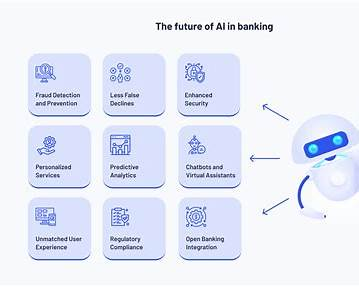
Regulators often require banks to explain why a loan was approved or denied. Many AI models—especially advanced machine-learning systems—operate as “black boxes,” making explanations difficult.
Human involvement provides accountability.
Bias in AI Lending: Is It Better or Worse Than Humans?
One of the most debated topics in AI lending is bias.
AI can reduce human bias by applying rules consistently. However, if historical data reflects inequality, AI can unintentionally replicate or amplify those patterns.
To address this, banks:
- Audit models regularly
- Test for discriminatory outcomes
- Maintain human oversight
Ironically, removing loan officers entirely could increase legal and ethical risk rather than reduce it.
What This Means for Borrowers
For consumers, AI-driven lending has clear benefits—but also new frustrations.
Benefits include:
- Faster approvals
- Fewer paperwork delays
- More consistent decisions
- Often lower costs
Challenges include:
- Less personal interaction
- Fewer opportunities to explain unique circumstances
- Difficulty appealing automated decisions
Understanding how AI works can help borrowers prepare better applications and know when to request human review.
Real-World Example: When Humans Still Make the Difference
A self-employed borrower applies for a mortgage. Their income fluctuates month to month, causing the AI system to flag the application as high risk.
A human loan officer reviews tax returns, contracts, and long-term earnings history. Recognizing stable income over several years, the officer approves the loan.
This type of judgment remains difficult for AI alone.
Will AI Ever Fully Replace Loan Officers?
In the near future, complete replacement is unlikely.
AI excels at:
- Speed
- Pattern recognition
- Scale
Humans excel at:
- Context
- Empathy
- Accountability
- Regulatory judgment
The future of lending is not AI versus humans—it’s AI augmenting humans.
How Loan Officers Can Stay Relevant in an AI-Driven World
Loan officers who rely solely on manual processing are at risk. Those who adapt are not.
Modern loan officers succeed by:
- Understanding AI-driven risk models
- Specializing in complex cases
- Acting as financial educators
- Building trust with customers
- Navigating regulatory requirements
In many cases, AI makes skilled loan officers more valuable, not less.
How This Shift Affects Trust in Banking
Consumers may distrust algorithms, but they value outcomes.
When AI:
- Delivers fair decisions
- Provides clear explanations
- Resolves issues quickly
Trust increases.
When decisions feel opaque or arbitrary, trust erodes. Banks are learning that transparency is just as important as automation.
Lending Is Becoming a Data Business
Modern lending relies heavily on data beyond traditional credit scores.
AI systems analyze:
- Payment history
- Spending behavior
- Employment stability
- Economic trends
Loan officers increasingly interpret these insights rather than generate them manually.
Regulatory Oversight: Why Humans Still Matter
Regulators closely monitor:
- Algorithmic fairness
- Explainability
- Consumer protections
- Accountability frameworks
This scrutiny slows full automation but protects consumers and the financial system.
Frequently Asked Questions (SEO-Optimized)
1. Will AI replace loan officers completely?
No. AI is automating routine decisions, but humans remain essential for complex cases and oversight.
2. Are banks already using AI to approve loans?
Yes. Most banks use AI for initial screening and many final decisions.
3. Is AI more accurate than humans in lending?
AI is often better at data analysis, but humans provide context and judgment.
4. Can a loan be denied without human review?
Yes, for simple products. Complex loans usually involve human review.
5. Does AI reduce bias in lending?
It can, but only if models are carefully designed and monitored.
6. Can borrowers appeal AI decisions?
Yes. Regulated lenders typically offer human review processes.
7. Are mortgage loan officers at risk of replacement?
Less so than personal loan officers due to complexity and regulation.
8. Do regulators allow fully automated lending?
Only with safeguards, transparency, and accountability.
9. Does AI affect interest rates?
Lower operating costs can lead to more competitive rates.
10. How should borrowers adapt to AI-driven lending?
Maintain stable financial behavior and be prepared to provide additional context when needed.
Final Takeaway: AI Is Transforming Lending—Not Eliminating Human Judgment
AI is not quietly eliminating loan officers. It is quietly redefining their role.
Banks are discovering that the most effective lending systems combine machine speed with human judgment. Borrowers benefit from faster decisions, while complex cases still receive personal attention.
The future of lending belongs not to algorithms alone, but to intelligent collaboration between humans and machines.
